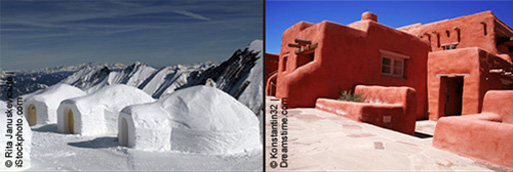
The Right Design for the Right Place
Key idea: Different designs are best suited for
different situations.
Activity: Students express their ideas about the
types of decisions that need to be made when designing a house. They
then consider how those decisions might change if the house were to
be built in a different location.
Standing against the Wind
Key idea: Decisions about designs can affect their
function.
Activity: Students construct a model house and test
it to see how well it stands up to wind. They then refine their
design before testing the model again.
Decisions Are Part of the Design Process
Key idea: Decisions have both benefits and costs.
Activity: Students consider how costs and benefits
influenced their model house design and then apply their ideas about
costs and benefits to a new situation.
Designer’s Dilemma
Key idea: Designers think about benefits and costs.
Activity: Students analyze the design of an object
using a series of questions to guide their thinking. They then
consider a mystery object to try to determine its function and the
reasons behind its design.
Selling Technology
Key idea: Designs for a product to help people
protect themselves during a weather event need to consider both
benefits and costs.
Activity: Students create a technology that will
help solve a weather-related problem for people. They then write an
advertisement and explain the reasons for the product’s design and
the costs and benefits of the product.




 Engage
Linking
Question Explore Linking
Question Explain Linking
Question Elaborate Linking
Question Evaluate
Engage
Linking
Question Explore Linking
Question Explain Linking
Question Elaborate Linking
Question Evaluate