





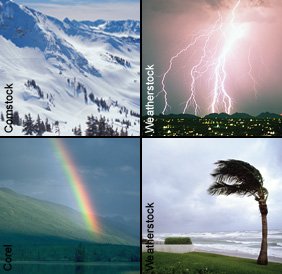
One, two, three, four … what comes next in the series? Have you done problems in math class that require you to determine what comes next in the series? In other words, have you figured out the pattern? You may not have thought about it before, but climate and weather also have patterns. These patterns can be explained by science.
Sometimes responding to changes in weather is easy because the patterns are familiar to us. At other times, responding to changes in weather is more difficult. Other types of natural events also have patterns to which people must respond. What can people do when they know that certain events may occur? How can knowing about patterns better prepare us to respond?
In this module, Responding to Patterns of Change, you will learn about different weather events and how they can be explained by science. As you learn about the weather, you will also see examples of technologies that help scientists study storms and natural disasters.
A key idea in this module is patterns. Patterns can help us determine where and when different weather events are likely to occur. If people know that a particular type of storm is likely to happen, they can use that knowledge to make decisions. For example, think about people who live where there is a good chance for a blizzard. If a blizzard is coming in the next couple of hours, they may simply decide to stay indoors. Other decisions need to be made in advance. If you needed to clear snow off the roads, you might need more than a couple of hours to get a plow. You would most likely need to have a plow well before the blizzard hits. Would everyone make the same choices? By the end of the module, you will have new ways of thinking about how people use information to make decisions.
The titles of the chapters are as follows:
-
Chapter 1: What Causes Weather Patterns?
Chapter 2: When Natural Events Become Natural Disasters
Chapter 3: Chance Affects Decision Making
Chapter 4: Making Decisions to Solve Problems