







Work by yourself to answer the following questions in your technology notebook:
-
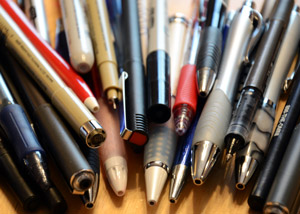
Figure 2-3: Diversity in the design of products. There are many different kinds of pens. How many different designs do you see?
List at least two other products that have diversity in their designs. In other words, list two products that have the same purpose but differ in how they look or how they meet that purpose.
Describe some of the different designs for the products you listed in Question 1.
How did a Venn diagram help you see the similarities and differences between the products your teacher showed you?
Think of a product you use every day, like a pen. When you shop for a pen, the store probably has many choices. (See figure 2-3.) Would you like more diversity or less diversity in those product designs? Why?
Answers to Reflect and Connect
Allow students time to work individually to complete the questions. You may wish to discuss some or all of the questions once they have had time to consider their answers.
-
List at least two other products that have diversity in their designs. In other words, list two products that have the same purpose but differ in how they look or how they meet that purpose.
Be sure that students understand the word diversity to mean that there are differences between the products. Students will have many different ideas. They will likely think of objects that they use every day, such as cell phones, MP3 players, backpacks, and notebooks. Accept all reasonable answers.
-
Describe some of the different designs for the products you listed in Question 1.
Students will have different answers depending on the products they chose. For example, if they chose a cell phone, they might list that some phones are flip phones, some have touch screens, some can connect to the Internet, or some have full keyboards. Accept any reasonable answers.
-
How did a Venn diagram help you see the similarities and differences between the products your teacher showed you?
Students may not have had much experience with Venn diagrams. They should recognize that the Venn diagram is a visual way to identify what is similar and different between the products by the use of circles with overlapping and nonoverlapping areas, respectively.
-
Think of a product you use every day, like a pen. When you shop for a pen, the store probably has many choices. (See figure 2-3.) Would you like more diversity or less diversity in those product designs? Why?
Research has shown that questions that relate content to students’ lives serve as a motivating factor for them. This question serves that purpose. Students will have different ideas. Some may feel that they would like to have many choices about the products they use. Others may feel overwhelmed by the number of products and would like less diversity among the designs. You may need to help them think of something they use every day. The examples listed will help get them started, but depending on the student, you might also suggest water bottles, backpacks, cell phones, or athletic equipment.