




You just solved a problem for Jason and Sam. Solving problems can be fun. Think about other problems you could solve. Maybe you want to invent a new way to clear the dishes off the dinner table. Maybe you keep losing things and want to find a better way to keep track of them. Or maybe your backpack is too heavy, like the one in figure 7, and you want to find a new way to carry it. How would you come up with a solution? Would your process count as doing technology?

You will learn more about doing technology as you proceed through this Explain activity. You will also learn more about people who do technology. In the end, you might have some new ideas about technology and the problems you can solve. Materials
-
Set up your technology notebook to start this new activity. Hint
-
Obtain a set of Process of Technology Design cards from your teacher. Each card shows a different stage in the process of technology design.
-
In the Explore activity, you listed some things you thought people who do technology might do at work. Now read All in a Day’s Work to learn more about one person who does technology in her job. As you read the scenario, try to match what she is doing with the stages shown on the Process of Technology Design cards.
All in a Day’s Work
Traci Morgan (see figure 8) is an engineer. She does technology every day in her job. Morgan works to help food and drink companies make their products. She helps the companies figure out the best way to design their factories to make the food and drinks. She also makes sure that all the equipment works the right way.
-
 Traci MorganFigure 8: Traci Morgan is an engineer. She does technology every day in her job.
Traci Morgan describes engineering as “helping people solve problems.” To do this, she has to look at problems in a different way. It is similar to being a private investigator. She has to work with clients to figure out what the problem is. Then she has to think of different ways to solve that problem.
Sometimes Morgan helps companies make a brand-new product. Other times she helps them figure out how to make a product more efficiently. Think about someone making a cake in the kitchen. It might take an hour to make the cake. Now, imagine if the person had to make 500 cakes in an hour! What do you think could be done to help the person make the cakes more quickly?
There are a number of steps that you would have to consider to make 500 cakes:
- Decide where you will get the ingredients.
- Determine how you will get the ingredients into the mixing bowl.
- Specify how long you need to mix the ingredients.
- Determine how you get the batter into the pans.
- Determine how you cook the batter in the pans.
- Determine how you take the baked cakes out of the pans and cool them down.
- Decide how to wrap the cakes and get them to the store.
In engineering, it takes several steps to solve any problem. The problem does not have to be about cakes. It could be about switching lights on and off, making toothbrushes, or bottling drinks. The next time you visit a grocery store, pick out an item and think about the steps that are needed to make it. How does it get packaged? How many people might be involved?
To help you think about the steps that it takes to make a product, read about what Morgan does in her job. One client that Morgan has worked with has a factory that bottles drinks, such as the ones in figure 9. The factory was new, so Morgan first had to figure out how to get the drinks bottled. She had to discuss the problem that the client needed to solve to make sure she understood what needed to be done. Then she had to go to the factory to do her work. Her next job was to figure out how to help the factory get the drinks in the bottles as quickly as possible. To do this, she had to consider several steps. At each step, she had to think about different ways to make sure the equipment worked correctly.
-
 Ray CunninghamFigure 9: How many steps do you think are involved in bottling these drinks?
Once the equipment was in place in the factory, Morgan had to make sure it worked correctly. She decided to run water through all the pipes to check for leaks. She didn’t want to have any waste.
Next, she had to make sure all the pipes were clean. It is important that nothing else get into the drinks. She ran a soap solution through all the pipes to wash them. After that, she used water to remove all the soap from the pipes.
The next step was to take water samples. By doing this, Morgan could make sure that she washed the pipes long enough. She could also make sure that no soap solution was left in the pipes.
After these steps, the equipment was ready for the drinks. All these steps just to get the drinks in the bottles! Morgan’s job was not finished, however. There were still steps to be taken to get the drinks into their final packages. What other steps would you have to think about to get the drinks ready for the store?
Once the drinks were bottled, Morgan worked with the client to make sure the results were satisfactory. She and the client talked about whether the equipment worked well. They talked about how quickly the drinks were being bottled. They also made sure that all the drinks tasted right.
Finally, Traci wrote a report on what she had done. That way, other engineers could see the work she did.
-
-
The stages of technology design follow an orderly pattern. Based on the scenario, put the Process of Technology Design cards in an order that would make sense.
-
Read The Process of Technology to help you put the cards in the correct order. If you need to, you can rearrange the cards as you read.
The Process of Technology
People who do technology try to find solutions to problems. Sometimes they try to prevent problems from happening. These people include engineers, scientists, architects, and designers.
As you went through this chapter, you saw some examples of technology. Contact lenses, factory equipment, and a tool for turning a light switch on and off are all types of technology. What is technology, then? Technology is anything that helps people solve problems. Hint
-
 Figure 10: Contact lens. Contact lenses are an example of technology. They solve the problem of not being able to see well. To solve this problem, contacts extend the limits of a person’s vision.
Technology can help people change their limits. For example, some people wear glasses or contact lenses, like the contacts in Figure 10. These devices allow people to change the limits of how well they see. In the Explain activity, you designed a solution that changed Sam’s limits. You extended his reach so he could turn the light switch on and off.
When people do technology, they are using the information they have to solve problems. They might do this by developing a tool that changes human limits. Doing technology can also be called engineering.
Scientists, engineers, and other people who do technology have a process they follow to solve problems. First, they have to identify the problem. People who do technology need a clear idea of what problem they want to solve.
Next, people who do technology come up with ideas about how to solve the problem. It is important to come up with several possible ways to solve the problem. Engineers have to consider many factors. They have to think about cost, materials, time, space, and safety. What is the next stage? Each idea they come up with must be carefully tested. Each plan is drawn or written down, which makes it easier to explain the ideas to others.
-
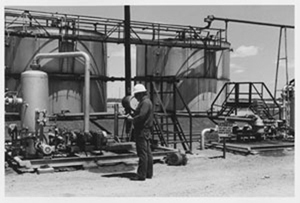 Bureau of Land Management / New MexicoFigure 11: Engineers must evaluate their solutions. To do this, they collect data, or evidence.
Engineers and designers carry out each idea and see how well each one works. They evaluate the pros and cons for each idea to see which one provides the best solution. To do this, engineers collect data, or evidence, as in figure 11. They analyze the evidence and ask questions about how well each idea worked. From this process one idea will be the best one for solving the problem.
The final stage of the process of doing technology is to share the results. Sharing information is important in science and engineering. People who do technology write or tell about their own process. They communicate with words, pictures, and diagrams. They tell people about the problem and how they solved it. They also share how the solution works and whether they did anything to make it work better.
Sometimes even a good design might not work. Were all students in your class successful with their designs in the Explore activity? Solving one problem might create another problem. For example, imagine a factory. Maybe the factory has new equipment that helps it make its products more quickly. But when the new equipment is running, the engineers and designers find out that the factory produces a lot more pollution. Now they must plan a solution to a new problem, and the design process starts all over again.
-
-
Draw a diagram in your technology notebook to show how you ordered the stages shown on the Process of Technology Design cards. Next to each stage, make a brief note about what a person would do during that stage.
-
Work on your own in this step. Think about this process for solving problems. In your technology notebook, write a few sentences describing whether you think this is a good way to solve problems. Explain your answer.
-
Discuss with your partner your ideas about the process of doing technology. Use the following steps to help you discuss your ideas.
- Share your ideas with your partner by reading your answer to Step 7. Do not add any additional explanation.
- Ask your partner for advice on how you could improve your answer.
- Work by yourself to revise your answer based on your partner’s feedback. Remember to think about whether the advice was good. You do not have to make all the changes that your partner suggested if you disagree with your partner’s advice. Make any changes in a different-colored pen or pencil. Hint
-
The strategy you used in Steps 7 and 8 is called the Think-Share-Advise-Revise (TSAR) strategy. Read How to Use the Think-Share-Advise-Revise Strategy to learn more about it.
-
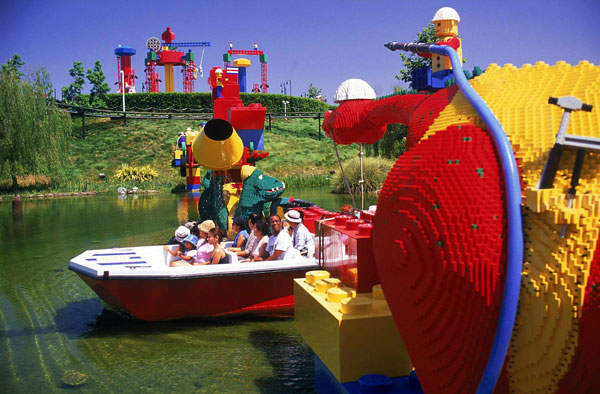
You may be interested in learning about another example of doing technology. If so, read the sidebar The LEGO Group’s Success Story. As you read, try to identify each stage of the technology design process. Sidebar
-
Participate in a class discussion about the steps in the process of doing technology.
Activity Overview
During the Explain activity, students will use cards identifying parts of the process of technology design to help them understand how to solve a problem. They will read about one engineer’s work at designing solutions. Then, they will put the cards in an order that reflects the problem-solving process.
Before You Teach
Background Information
Doing technology can also be thought of as engineering. Engineers design solutions to help people expand their limits. This includes making a job more efficient or easy.
Engineering is a process. In the scenario All in a Day’s Work, engineer Traci Morgan has to make sure there are no leaks in the bottling equipment before putting in any drinks. Then she has to clean all the equipment so that the drinks are not contaminated. Next, it is important that there is no soap left in the equipment before the drinks are added. Finally, it is time to begin bottling. This activity is an introduction for students to the stepwise process. In the next activity, they will learn the general steps taken in technology design.
Materials
For each class of 30 students:
- 15 sets of Process of Technology Design cards
- pens or pencils of various colors
- sticky notes (optional)
Advance Preparation
Make copies of Master DT-2, Process of Technology Design cards. You may wish to laminate the card sets for later use. Cut the cards apart to make individual card sets for 15 teams of two students. Shuffle the cards so that they are not in the order as shown on the master.
As You Teach
Outcomes and Indicators of Success
By the end of this activity, students will
-
be able to describe the steps in the process of doing technology.
They will demonstrate their ability by
- placing cards about the process of technology in order
- drawing a diagram of the process of technology and writing a description of each stage
- examining a feature in a graphic of the process of technology.
-
formalize their understanding of doing technology.
They will show their understanding by
- describing the stages of the process of technology
- deciding whether they think this is a good process for solving problems.
-
consider the types of people who do technology.
They will show their consideration by deciding whether there are limits on who can do technology.
-
reflect on the phases of the BSCS 5E Instructional Model.
They will show their reflection by describing what they did in the activity that matches the goals of an Explain activity.
Strategies
Getting Started
As a class, look at the chapter organizer. Read the introduction to the activity and hold a brief discussion about the questions presented there.
Process and Procedure
-
In Step 1, have students set up their technology notebooks for a new activity. Have them read the hint. They should put the activity title and date on a new page and add the activity to the table of contents. This task is the first step in the activity, but note that the detailed directions are omitted. This is a way to help students take responsibility for their technology notebooks and learning. Later in the module, they will be responsible for remembering to set up their technology notebooks on their own.
-
Provide students with sets of the Process of Technology Design cards. Give them time to read the cards. They will learn more about each stage later in the activity, so you may clarify what words mean for them, but do not take much time to go through each stage.
-
Have students read the scenario All in a Day’s Work. They may do this individually, in teams, or as a class. Make sure students complete the strategy of identifying the different stages in the technology process as they read about Traci Morgan’s work.
-
Have students put the stages of technology design in an order that makes sense. Do not correct them. They will learn more about the stages in the next step. Step 4 serves as a pre-reading strategy.
-
Students can read The Process of Technology individually, in a team, or as a class. In this reading, technology and doing technology are defined for them. They learn about the different stages of the process of technology design and what is done at each stage. Remind them to rearrange their cards as they need to. This is the during-reading strategy.
-
Step 6 is a post-reading strategy. Have students draw a diagram of the final order of their cards. You may need to help them understand the word diagram by explaining that it means “picture.” They should make notes about each stage to help them remember what happens during that time. Most will draw a linear diagram for this step. When you circulate around the room, if you notice many linear diagrams, ask students if they think engineers begin with one stage and go through each of the steps only one time. If they say no, ask how they might represent more accurately the way to solve problems.
-
Give students time to write a few sentences about this process of solving problems. Some will think that it sounds like a long, time-consuming process. Others will realize that by doing each stage, a person can work in a systematic way and not leave anything out of the solution. Encourage those students who think it sounds time consuming to consider an advantage or two of solving problems this way.
-
Step 8 introduces students to a metacognitive strategy called Think-Share-Advise-Revise, or TSAR. This is a way of helping them work together, but in a specific way to share information. They already did their “thinking” in Step 7 when they wrote down an answer. They will continue with the rest of the strategy in Step 8.
Your guidance is very important the first few times going through a new strategy. In Step 8a, students share their ideas. To do this, they read their answers word for word to one another. This means that technology notebooks should not be exchanged. Make sure that students understand they can read only what they wrote on the paper. As they use this strategy more and more, it will help them understand the importance of written communication. They cannot verbally add in “What I meant was” or “You know what I mean.” Rather, they begin to practice writing what they want to say, an important part of communication about science and technology.
In Step 8b, students advise each other. Each teammate should ask the other for advice on how to improve the answer. From the beginning, encourage students to provide useful feedback to one another. Saying “good job” or “nice handwriting” does not help students improve their answers. Have students focus on making useful comments that can truly improve answers. Examples of comments that are useful are, “I think you could be more detailed here” or “An example might make this clearer.” Be sure each student in the team takes an opportunity to ask for and receive advice.
In Step 8c, students carry out the revised portion of TSAR. This should be done individually. As always, students should make revisions in a different-colored pen or pencil. Remind them that they do not have to heed all of the advice offered by their partner, but that they should consider each piece of advice. If students do not seem to be doing a good job with the advise and revise portions of TSAR, one option is to have them write their feedback on sticky notes and give the notes to their partner. Each student must then either address the feedback or write on the sticky note why he or she chose not to take that advice. This will help them consciously think through the ideas of their teammates.
-
Steps 7 and 8 took students through the steps of the TSAR strategy. In Step 9, they are instructed to read How to Use the Think-Share-Advise-Revise Strategy, student version. Throughout this program, there are occasional links to How To documents. Often, these will be optional steps for students who need additional help. How to Use the Think-Share-Advise-Revise Strategy is included here as a required step to give students a better introduction to both the strategy and the program. It will help them see that How To documents contain useful information. It is important, however, to realize that How To documents provide general information about a particular idea, so they will not match exactly the information in an activity. To help support you in facilitating this strategy, see How to Use the Think-Share-Advise-Revise Strategy, teacher version. Note that for each How To document used throughout the program, there will be two versions—a teacher version and a student version.
-
In this program, sidebars, such as the one in Step 10, are optional readings. Decide on a case-by-case basis whether to have your class read them. If you are running out of time, consider skipping them. Many of the sidebars contain information that will be very interesting to your students, so have your class read them if it is possible. The LEGO Group’s Success Story sidebar in Step 10, in particular, is likely to be of great interest to them. It describes the process of technology design as it relates to the development of LEGO toys. Many students will not realize that this is an example of technology. They will also enjoy reading about the history of the toys.
-
A class discussion can help clarify students’ ideas about the process of technology. They should also talk briefly about how they think the stages in the process of doing technology can help solve problems. Ask them if they can identify any problems in the stages and whether they think the benefits of the process outweigh any negatives. This is an opportunity to clarify if they think that the process of technology is strictly a linear endeavor. Encourage them to think about the process as an iterative one where an engineer might begin the process a second time or go back to certain stages of the process.